
That moment when a projector looks amazing on a product page and awkward in your room usually comes down to one thing: the screen was sized from hype, not math.
A good projector screen size calculator for room planning should tell you more than diagonal inches. It should answer the questions that actually matter in real life. Will the image fit the wall? Will people in the back squint at text? Will the picture wash out during the day? And if you live in an apartment or need a portable setup, will the projector placement make any sense at all?
This is where buyers get misled. A giant image sounds impressive until you realize your projector has to sit in the middle of the room, your screen hangs too low over a console, or your brightness drops so much that daytime viewing becomes a gray blur. Bigger is not automatically better. Better is what fits your room, your seating, and the way you actually watch.
What a projector screen size calculator for room planning should include
At minimum, a calculator should combine four variables: room dimensions, throw distance, seating distance, and screen aspect ratio. If it leaves out any of those, it is giving you an estimate, not a decision.
Room dimensions tell you your physical limits. That sounds obvious, but many people measure wall width and stop there. Ceiling height matters just as much, especially if you want a 120-inch screen in a bedroom, over furniture, or in an office where the bottom of the image cannot sit too low.
Throw distance is the space between projector lens and screen. This is the number that decides whether your projector can create a 100-inch image from a shelf, a coffee table, a ceiling mount, or a near-wall placement. Standard long-throw projectors need more room. Short-throw and ultra short throw models can create large images from much closer, which is often the difference between a workable small-space setup and a room with cables stretched across the floor.
Seating distance matters because image size should match how far away people sit. For movies, a more immersive screen can feel great. For sports, casual streaming, and family viewing, slightly smaller can feel more comfortable. For office presentations, screen size has to support readability, not just impact. A spreadsheet that fills the wall still fails if the smallest text is fuzzy from the back row.
Aspect ratio is the shape of the screen. Most home setups use 16:9 because streaming, TV, and gaming content are designed around it. Many business and presentation setups still benefit from 16:10 or 4:3 depending on source material. If your calculator ignores aspect ratio, the width and height it gives you may be wrong for your content.
The simple math behind screen size
Most people think in diagonal inches because that is how TVs and screens are sold. Rooms do not work that way. Rooms care about width, height, and placement.
For a 16:9 screen, a few common sizes help anchor your planning. A 100-inch screen is about 87 inches wide and 49 inches tall. A 120-inch screen is about 105 inches wide and 59 inches tall. A 150-inch screen jumps to roughly 131 inches wide and 74 inches tall.
That jump matters. Going from 120 inches to 150 inches sounds like a modest upgrade, but the image area increases dramatically. That means you need more wall, more brightness, and often more disciplined placement.
This is why a calculator should be used backward as well as forward. Instead of asking, "How big can I go?" ask, "What size still leaves enough margin for furniture, speaker placement, and comfortable sightlines?"
Screen size is not just a wall measurement
A lot of buyers choose based on empty wall space and ignore viewing comfort. That is how you end up with a bedroom screen so large that subtitles sit at the edge of your vision, or a meeting room display that overwhelms the front row but still does not help the back row read text clearly.
For movie watching, a common sweet spot is when seating distance is about 1.2 to 1.6 times the screen diagonal, depending on how immersive you want the image to feel. Sit closer and the experience becomes more cinematic, but also less forgiving with low-resolution content or poor focus. Sit farther and the image may feel underwhelming.
For presentations, comfort shifts toward clarity. If your use case includes spreadsheets, dashboards, or dense slides, prioritize a screen size that keeps text readable across the room. Oversizing a low-quality projector image does not improve legibility. It magnifies softness.
Why throw distance changes everything
The most common sizing mistake is falling in love with a screen size before checking whether the projector can produce it from the intended spot.
If your projector has a limited zoom range or fixed throw ratio, the installation becomes less flexible than many buyers expect. You may discover that a projector on the back shelf creates an image too large for the screen, while placing it on the coffee table creates the right size but turns the room into a cable obstacle course.
This is where room-first planning beats spec-sheet shopping. In small apartments, bedrooms, and multipurpose spaces, near-wall projection often makes more sense than a traditional long-throw projector. A short-throw or ultra short throw setup can deliver a large image without demanding deep room length. It also keeps walkways clear and can make a cleaner permanent installation possible.
A proper projector screen size calculator for room use should let you test different projector positions, not just one theoretical maximum.
Brightness is part of screen size, whether sellers admit it or not
A screen size calculator that ignores brightness is only doing half the job.
As image size increases, brightness spreads across a larger surface area. That means the same projector that looks punchy at 100 inches may start looking flat at 150 inches, especially in ambient light. This is one reason cheap projectors make such exaggerated promises. They advertise giant image capability as if image size and image quality are the same thing. They are not.
If you want daytime viewing in a living room, or if your office has windows and overhead lighting, your realistic screen size may be smaller than the wall allows. Pairing the projector with the right screen can help, especially with ALR options in brighter environments, but there is still no magic trick that turns weak real-world brightness into a crisp giant image.
The smarter approach is to choose a size your projector can light properly in your actual room conditions. That is less flashy than a marketplace listing promising 200 inches, but it is a lot closer to a setup you will enjoy using.
Height and placement mistakes people catch too late
Wall width gets all the attention, but height causes just as many headaches.
A 120-inch 16:9 screen is nearly 5 feet tall. Add a frame or housing, then account for bottom clearance above furniture, and suddenly your "perfect fit" starts colliding with a media console, fireplace, or low ceiling. In bedrooms, the problem is often line of sight from the bed. In offices, it is making sure the bottom of the screen is high enough to clear tables while keeping the top from becoming uncomfortable to view.
Portable setups have their own version of this issue. A tripod screen or freestanding screen may physically fit, but it also needs enough height and stable placement to avoid awkward viewing angles.
This is why serious room planning uses width, height, and viewing angle together. Not just diagonal size.
A practical way to calculate your best screen size
Start with the wall. Measure the maximum usable width and height, then subtract space for trim, furniture, speakers, and a little breathing room so the setup does not look crammed.
Next, confirm projector placement. Measure the real lens-to-screen distance from where the projector will actually live, not where you hope it might work. If you need portability, test more than one position.
Then choose the viewing priority. If this is mostly movies in a dark bedroom or media room, you can lean more immersive. If it is family room streaming with lamps on, daytime sports, or office presentations with text, give more weight to brightness and readability.
After that, pressure-test the result. If the screen size only works with the projector in a bad location, if image brightness will be stretched too far, or if the screen sits too high or too low, step down a size. A slightly smaller screen that works every day beats a larger one that only looks right under perfect conditions.
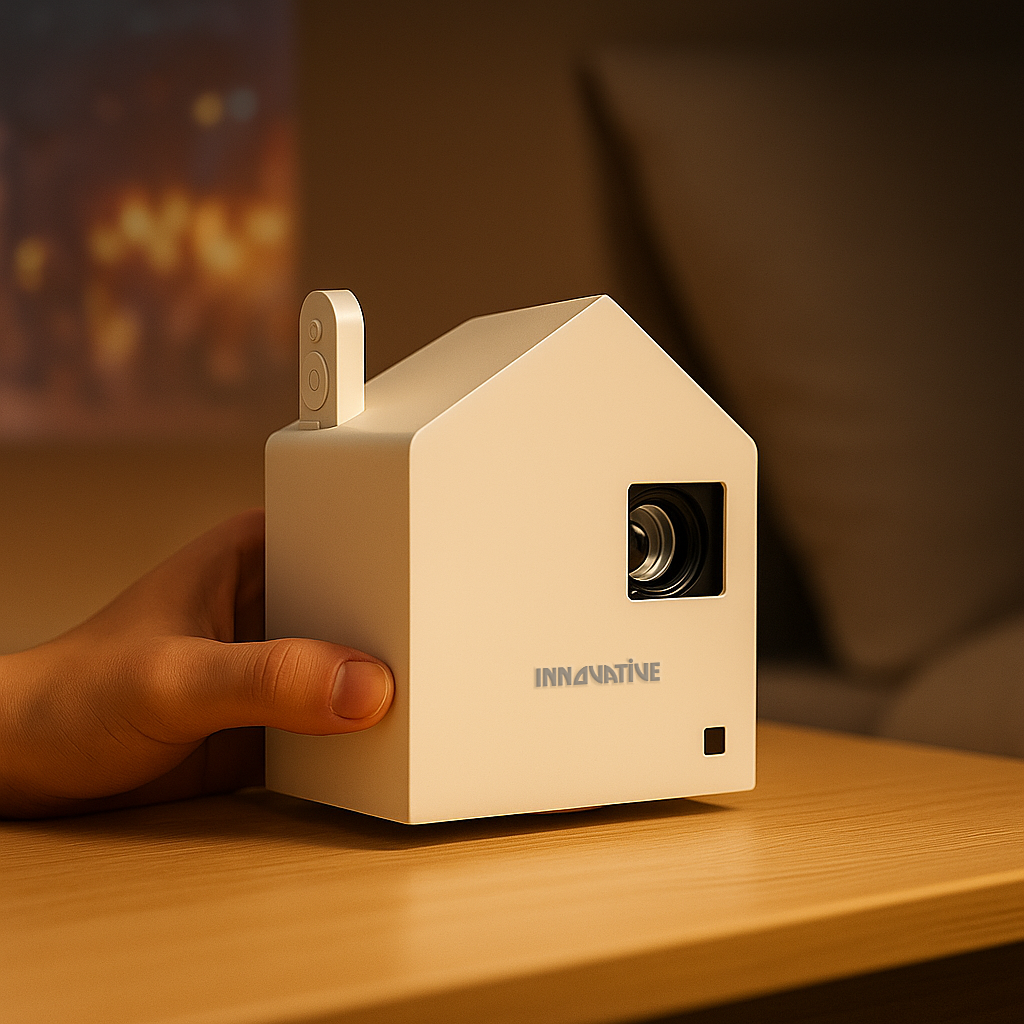
For buyers who want a cleaner path, this is exactly why scenario-based shopping matters. At INNOVATIVE Projectors, the better question is not "What is the biggest image possible?" It is "What screen size fits the way you live and watch?"
When it depends
There is no single best screen size for every room, even with the same dimensions. A family watching movies at night can choose differently than someone presenting financial reports at 2 p.m. A battery-powered room-to-room setup has different limits than a ceiling-mounted living room installation. A near-wall projector changes the whole equation compared with a shelf-mounted unit.
That is not a flaw in the math. That is the point of the math.
A good calculator should narrow your range, not pretend there is one perfect universal answer. Once you know your wall space, throw distance, seating distance, and room light level, the right size usually becomes obvious. And when it does, you stop shopping for bragging rights and start building a setup that actually feels good to use.