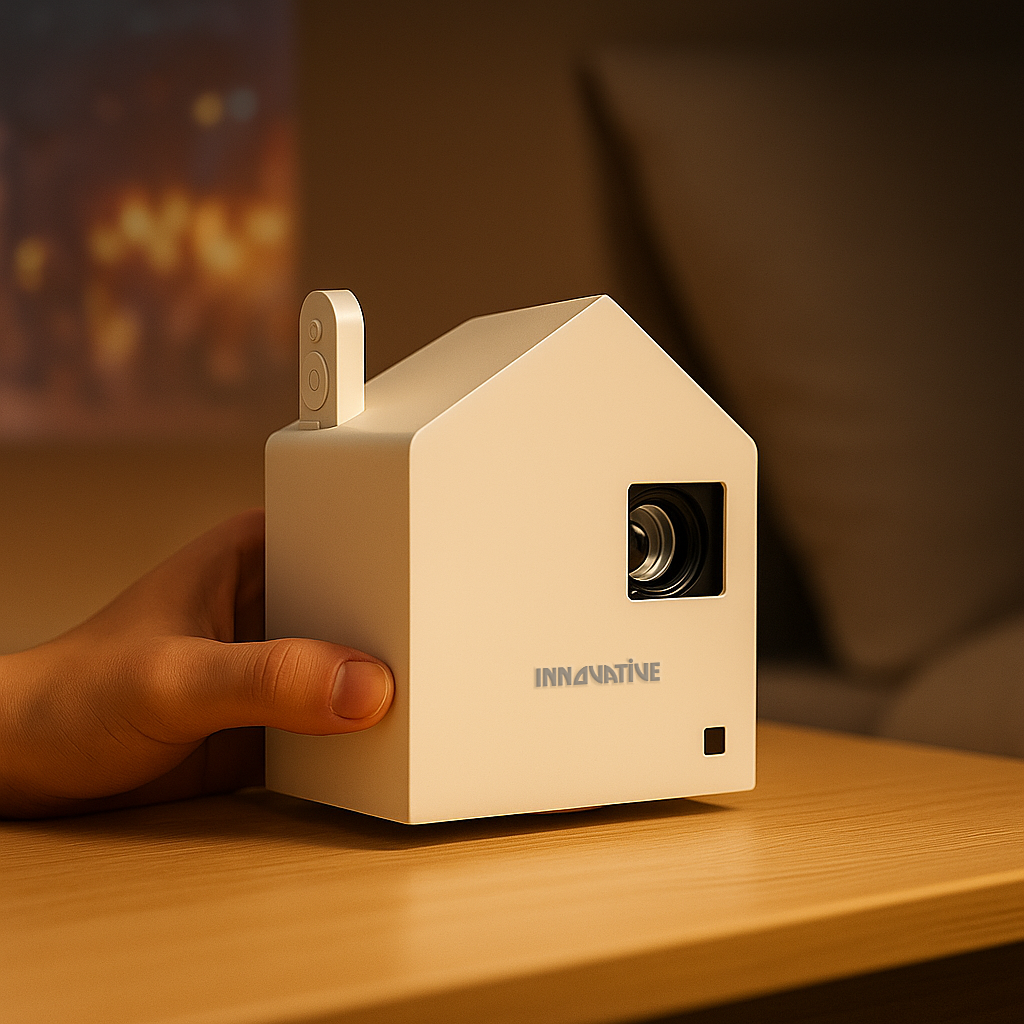

If you're comparing the Hisense C2 Ultra with our Eva Vela 360, you've probably noticed the odd thing about this comparison: one costs S$4,499 and the other costs S$699.
So let's be upfront. These are two very different machines, built for two very different rooms. This isn't a "cheap one secretly beats the expensive one" article. The C2 Ultra is a genuinely capable projector. The real question — the one that actually saves you money or regret — is simpler:
Which one is built for the room you actually live in?
We've sold projectors in Singapore since 2006. Here's the honest version.
The 30-Second Verdict
Choose the Hisense C2 Ultra if you have a dedicated, light-controlled theatre room, you game seriously on a big screen, and the S$4,499 price sits comfortably in your budget.
Choose the Eva Vela 360 if you live in an HDB flat or condo, you watch mostly at night in the bedroom or living room, you want Netflix, YouTube, mewatch and StarHub content without an extra box — and you'd rather keep S$3,800 in your pocket.
Now the details, spec by spec.
Laser vs LED: The Comfort Question
The C2 Ultra uses a triple-laser light source — Hisense's flagship technology, and on paper the more advanced choice. Laser projection is bright and produces a wide colour range.
But laser projection has a well-documented characteristic called speckle: a fine, grainy shimmer in the image caused by the way laser light interferes with itself. Some viewers never notice it. Others find it tiring over a long movie, especially on bright, uniform scenes.
Laser projectors also ship with proximity sensors that dim the image when something (or someone) gets close to the lens — a sensible safety measure for a laser light source, but one more system between you and your movie.
Eva Vela uses LED. LED light doesn't speckle. It doesn't need proximity sensors. The picture is smooth and stable for hours of viewing, and there's nothing to trigger accidentally when your kid or cat wanders past the lens.
Is laser "better" on a spec sheet? Yes. Is LED more comfortable to actually live with every night? We think so — and you can judge both light sources with your own eyes at our showroom.
The Lumens Game (And Why We Don't Play It)
You'll see brightness numbers on every projector listing — ANSI lumens, ISO lumens, LED lumens, "marketing" lumens. Here's what two decades in this industry has taught us:
Brightness figures between brands cannot be meaningfully compared. Different brands use different measurement standards, and the number only describes white light output — it says nothing about contrast, colour, or how dark scenes look. And since a projector cannot project "black," raw brightness tells you very little about how a movie actually looks in your room at night.
So we won't quote you a lumens figure and pretend it settles anything. Instead: bring your favourite movie to Sim Lim Square, and watch Eva Vela in a lit room. Your eyes are a better instrument than any spec sheet.
4K vs Native 1080p: The Distance Truth
The C2 Ultra is a 4K projector. Eva Vela is native 1080p with 4K input support. Point to Hisense? On paper, yes.
In practice, resolution advantage depends on viewing distance. At typical Singapore living room distances — 2.5 to 3.5 metres from the image — the difference between a good 1080p picture and a 4K picture is far smaller than the spec sheet suggests, and for many viewers not visible at all. Display resolution matters most when you sit very close to a very large image, which most HDB and condo rooms simply don't allow.
A stable, bright native 1080p image can also look sharper in real use than a "4K supported" picture produced by pixel-shifting on a lower-cost projector. Resolution is one ingredient in sharpness, not the whole recipe.
If you're building a dedicated theatre with a 120-inch screen and front-row seating, 4K earns its price. For everyday viewing in a normal room, native Full HD is right-sized — and that's a design choice we made deliberately.
VIDAA vs Google TV: The App Question That Matters in Singapore
This is the comparison point we think Singapore buyers should weigh most heavily.
The C2 Ultra runs VIDAA, Hisense's own smart TV platform. VIDAA covers the major international apps, but its app library is significantly smaller than Google's, and as of writing it does not offer the local apps many Singapore households actually use — like mewatch or StarHub TV+ — nor a full web browser. (App availability changes over time; check Hisense's current listings before you buy.)
Eva Vela runs Google TV with access to the full Google Play Store. That means Netflix, YouTube, Disney+, Prime Video — and the local viewing that matters here: mewatch, StarHub TV+, and a proper Chrome browser when you need one. Plus voice search and your phone as a remote.
A projector is a 5-to-10-year purchase. An open app platform ages better than a closed one.
"I'll Just Plug In an External Google TV Box" — Why That's Not a Full Fix
The common workaround we hear: "VIDAA doesn't matter — I'll buy a Google TV streamer or Apple TV and plug it into the HDMI port." You can absolutely do that, and it works. But it's worth understanding what you're actually getting, because a projector is not a dumb screen.
A modern smart projector is tuned as a complete system. The picture processing — colour mapping, sharpness, motion handling, brightness behaviour — is calibrated around its own platform and native playback path. That's the configuration the engineers optimised, tested, and demo in showrooms. When you feed the projector from an external box over HDMI instead, you're watching a signal path the system wasn't primarily tuned around. The result can still be good — but it may not be the picture the projector was engineered to show at its best, and you may find yourself adjusting settings to chase the clarity you saw in the demo.
There are practical costs too: a second remote to juggle, a second power socket, an occupied HDMI port, and another S$100–300 on top of an already S$4,499 purchase — to add apps the projector arguably should have shipped with.
Eva Vela doesn't have this workaround problem because it doesn't need the workaround. Google TV is the native system — the picture is tuned with Google TV as the primary path, the apps are built in, and one remote runs everything. What you see is exactly what the system was designed to show.
Placement: The Gimbal Advantage
The C2 Ultra includes an integrated gimbal stand with optical zoom, which gives it real placement flexibility — credit where due.
Eva Vela's full 360° rotating gimbal takes the same idea further in one direction that matters enormously in small homes: it rotates to project straight onto your ceiling. Lie in bed, point it up, movie night. It also has a standard camera-tripod thread, so it mounts on any tripod or stand you already own, and an optional mount makes it permanent on a ceiling or wall.
In a 3-metre HDB bedroom, the ability to use your ceiling as the screen isn't a gimmick — it's the difference between owning a projector and actually using one every night.
Sound: An Honest Philosophy
The C2 Ultra ships with JBL-tuned 2.1 speakers including a built-in subwoofer — genuinely good hardware.
Our view on projector audio is different, and we'll state it plainly: a projector sits behind you, and movie sound should come from in front of you — from the screen. However good the built-in speakers are, physics puts them in the wrong seat.
Eva Vela includes an honest 6W speaker with gentle bass — perfect for quiet late-night viewing. For proper movie nights, pair any Bluetooth soundbar positioned at the wall. Part of the S$3,800 you're not spending on the projector buys an excellent standalone soundbar that will outperform any speaker built into a projector body — because it's pointed the right way.
Where the C2 Ultra Genuinely Wins
We promised honesty, so here it is:
Serious gaming. Hisense has optimised the C2 Ultra for console gaming with high refresh rate support. If competitive gaming on a huge screen is your priority, it's the stronger machine — though we'd suggest you bring your own PS5 or MacBook to our showroom and test Eva Vela's HDMI input yourself before assuming you need to spend 6x more.
Maximum brightness ceiling. A flagship laser source can push more raw light than LED. If you're fighting significant ambient light on a very large screen, the laser has more headroom.
Dedicated theatre rooms. If you have the light-controlled room, the big screen, and the budget, the C2 Ultra is built for exactly that scenario.
No projector — ours included — beats the midday sun. If you want to watch in a bright room at noon, the honest answer is a TV, not any projector at any price.
The Bottom Line
| Hisense C2 Ultra | Eva Vela 360 | |
|---|---|---|
| Price | S$4,499 | S$699 |
| Light source | Triple laser (speckle possible, sensors required) | LED (speckle-free, no sensors) |
| Resolution | 4K | Native 1080p, 4K input |
| Smart platform | VIDAA (limited local apps) | Google TV (full Play Store, mewatch, StarHub TV+) |
| Ceiling projection | Gimbal stand | Full 360° gimbal + tripod thread |
| Audio | JBL 2.1 built-in | 6W built-in + soundbar-first philosophy |
| Built for | Dedicated theatre rooms | Real Singapore homes |
Hisense specifications referenced from Hisense's published product pages as of writing; please verify current specs with Hisense before purchase.
Both are good machines. They're just built for different lives. If your life looks like a dedicated theatre room, buy the Hisense with our blessing. If it looks like an HDB or condo, evenings on the sofa, movies on the ceiling from bed — that's the exact life Eva Vela was designed around, at S$699.
See Both Claims Tested — In Person
Everything above is words. Here's something better: walk into our showroom at Sim Lim Square #05-55 (11am–8pm daily, Level 5 in front of the main lift), and watch Eva Vela in a lit room with your own content. Bring your PS5. Bring your MacBook. Bring your scepticism.
We've been here since 2006, every unit carries a 1-year warranty with walk-in service, and if we think a different projector — even someone else's — fits your room better, we'll tell you.
WhatsApp us: +65 9111 1255 · Eva Vela 360 — S$699
Frequently Asked Questions
Is the Eva Vela 360 a good alternative to the Hisense C2 Ultra in Singapore?
For HDB and condo homes where viewing happens mostly at night, yes — it covers the everyday use cases (streaming, ceiling projection, flexible placement, local apps) at a fraction of the price. For dedicated theatre rooms and serious gaming, the C2 Ultra remains the stronger fit.
Does laser projection damage your eyes?
No — certified consumer laser projectors meet international safety standards. The comfort difference is about speckle (a shimmer some viewers find fatiguing over long sessions) and the proximity sensors laser units require, not safety.
Can the Eva Vela 360 really project onto the ceiling?
Yes. The 360° gimbal rotates the projector to point straight up, with auto keystone correcting the image. It's designed for exactly this — bedroom ceiling viewing without any mounting.
Why doesn't INNOVATIVE publish a lumens rating for Eva Vela?
Because brightness figures between brands use inconsistent standards and don't predict real picture quality. We invite buyers to judge the picture in person at our Sim Lim Square showroom instead.