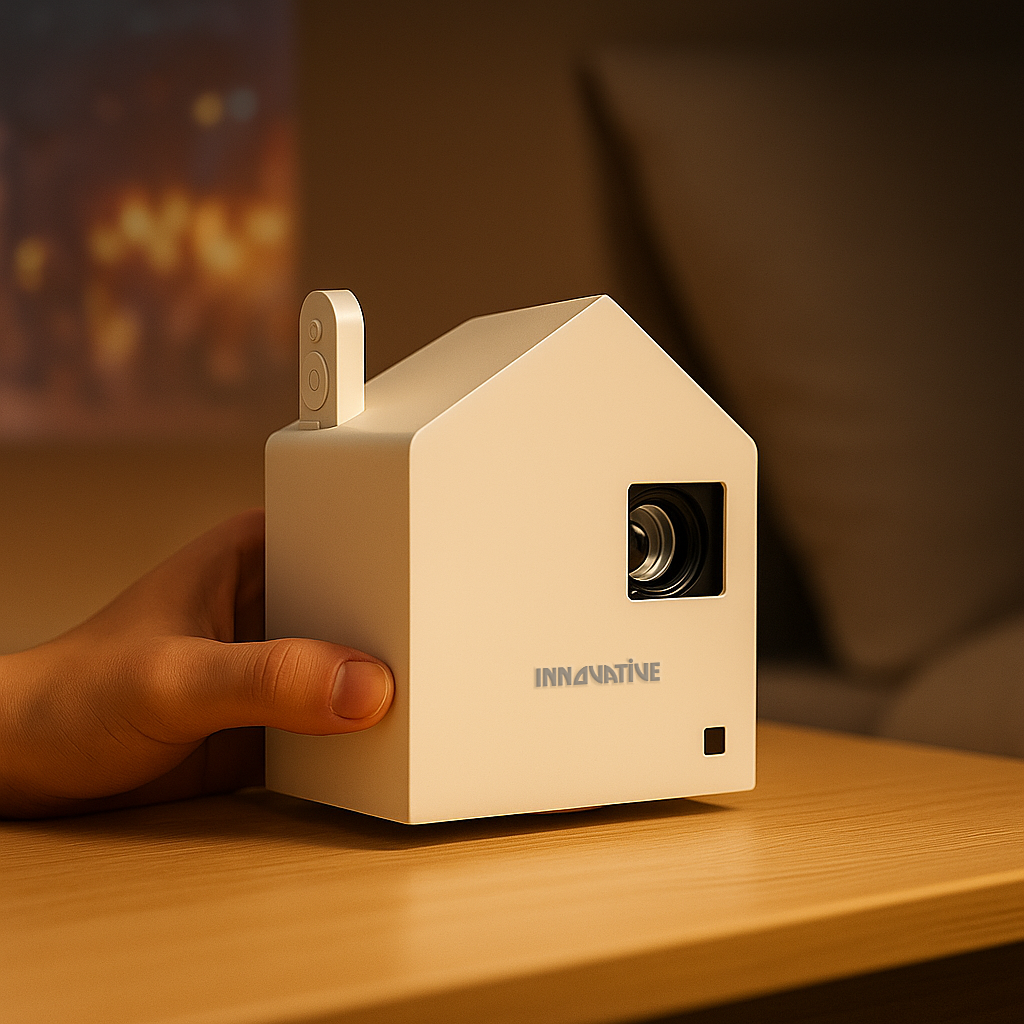

A projector that works without being tied to a wall outlet changes where big-screen viewing can happen. Movie night can move from the bedroom to the backyard. A presentation can happen in a client office without a scramble for extension cords. But a battery powered projector is not automatically the right projector just because it has a battery. This battery powered projector guide separates genuine freedom from marketplace specs that look impressive but fall apart in real use.
The right choice starts with a simple question: where will you actually use it? Battery power is most valuable when portability and fast setup matter. If your projector will live permanently in a bright living room, a brighter plug-in model and a proper screen may deliver a better image. No gimmicks, no inflated claims - just the setup that fits your room and routine.
What a Battery Powered Projector Is Good At
Battery-powered projectors are made for flexible viewing. They are especially useful for bedroom streaming, apartment living, kids' movie nights, camping, travel, and occasional presentations. You can place one on a shelf, coffee table, bedside table, or tripod, then pack it away when you need the room back.
That convenience matters more than it sounds. A compact projector with built-in streaming, Wi-Fi, Bluetooth, and an internal battery removes several points of friction. There is less cable management, fewer separate devices, and less pressure to build a dedicated theater room just to enjoy a large image.
For work, battery power is a practical backup rather than a substitute for every meeting-room projector. A portable projector can make a quick presentation in a small group setting or a location with limited power access. For recurring presentations in bright conference rooms, however, prioritize real brightness and tested text clarity. A battery does not make tiny spreadsheet text easier to read.
The First Myth: Battery Life Tells You Everything
A listing may promise two, three, or even more hours of battery life. That number is useful only if you know how it was measured. Battery runtime changes with brightness mode, speaker volume, Wi-Fi use, and the type of content playing. A projector running in its brightest mode will usually not last as long as it does in an energy-saving setting.
For most people, the honest target is around two hours of real viewing at a usable brightness setting. That covers a typical movie, an episode or two, or a presentation. If you regularly host double features or use a projector for all-day work, look for USB-C charging or the ability to run while connected to power. Battery capability should add freedom, not force you to watch a charging indicator.
Do not overlook recharge time, either. A projector that charges slowly can be frustrating if it is shared between rooms or taken on trips. Fast charging is valuable, but only when the projector is also designed to manage heat well. Small projectors have limited space for cooling, and excessive heat can reduce performance and long-term battery health.
Know the difference between portable and pocket-size
The smallest projector is not always the most portable in a meaningful way. A truly useful portable projector balances size, battery, speakers, image quality, and setup speed. Some ultra-cheap pocket models are easy to carry but deliver a dim, soft image that looks acceptable only in near-total darkness at a very small size.
A slightly larger model with a real optical system, dependable autofocus or manual focus, and a useful speaker is often the better travel companion. If the image is hard to see or the dialogue is hard to hear, saving a few ounces accomplishes very little.
Brightness Is Still the Deciding Factor
Battery operation comes with a trade-off: light output uses power. That is why portable projectors are generally best in controlled lighting, after sunset, or in rooms with curtains or blinds. Claims of huge brightness from tiny battery models deserve skepticism, especially when the listing uses vague terms such as “LED lumens” or “lux” without a clear real-world measurement.
Look for honest brightness information and consider the image size you want. A portable projector can create a pleasing 60- to 80-inch image in a dark bedroom or backyard at night. Asking that same device to fill a 120-inch screen in a sunlit living room is unrealistic. The image will look washed out, no matter how sharp the projector claims to be.
This is where a screen can make a larger difference than buyers expect. A smooth, purpose-built portable screen gives the projector a consistent surface and improves perceived contrast compared with a textured wall. Outdoors, it also avoids the color cast and unevenness that can make faces look strange on siding, fences, or wrinkled sheets.
If daytime viewing is your priority, battery power should be secondary. Choose a projector designed for bright-room performance, match it with an appropriate screen, and use the battery feature only if it does not compromise the brightness you need. Real-world testing matters more than an attractive number on a product card.
Choose by Use Case, Not a Spec Sheet
A good battery powered projector guide should narrow the decision before you compare resolution, inputs, or cosmetic features. Start with the room and the job.
For a bedroom or small apartment, focus on quiet operation, easy streaming, automatic image adjustment, and a compact footprint. A battery is valuable because you can project on a wall one evening and store the unit the next morning. Keep the image size sensible, and darken the room for the best result.
For outdoor movie nights, choose a projector with enough battery life for your usual movie length, a stable stand or tripod, and Bluetooth audio options. Built-in speakers are convenient for a couple of viewers, but an external speaker creates a much better experience for a family or group. Plan for darkness, because even a capable portable projector cannot compete with daylight.
For travel, prioritize durability, charging flexibility, and simple setup. An internal streaming platform can be useful, but check that your preferred services work reliably and that you can connect a laptop or media device when hotel Wi-Fi is unreliable. A projector that supports simple HDMI and USB-C connections gives you more options when plans change.
For presentations, put text clarity ahead of cinematic marketing. A projector can be technically high resolution and still make small fonts look weak if the lens, brightness, and focus performance are poor. Test with the kinds of slides you actually use: spreadsheets, charts, documents, and video calls. INNOVATIVE Projectors treats this as a real-world question, not an afterthought.
Setup Features That Save Time
Battery power feels liberating only when setup is equally easy. Look for a projector that can focus cleanly and correct its image without making the picture noticeably softer. Auto keystone and auto screen alignment are convenient for casual use, but avoid relying on extreme digital correction. The more correction a projector applies, the more image detail it can sacrifice.
Placement remains important. Put the projector as square to the screen or wall as possible, then use adjustments for small corrections. Check the throw distance before you buy. Some portable models need several feet to create a large image, while short-throw designs can work closer to the wall. A small room does not automatically need an ultra-short-throw projector, but it does need a model whose placement range matches the space.
Audio deserves the same practical thinking. Built-in speakers are fine for personal viewing, but they rarely replace a dedicated speaker outdoors or in a larger room. Bluetooth is convenient, although wireless audio can introduce lip-sync delay on some devices. If that matters to you, test it early or use a wired audio connection when available.
What Not to Compromise On
A lower price can be appealing, but the cheapest battery projector often creates the most expensive kind of purchase: one you stop using. Be careful with models that promise massive brightness, native 4K, long battery life, premium sound, and a giant image in a tiny chassis at a suspiciously low price. Physics still applies.
Prioritize a clear, usable image, credible brightness, stable software, reasonable battery runtime, and a warranty from a seller that can explain what the projector is actually designed to do. If you are deciding between a brighter plug-in projector and a dimmer battery unit, choose based on your most frequent use. Occasional outdoor movies favor convenience. Daily living-room viewing usually favors light output.
The best battery-powered setup is the one you will use without turning movie night into a technical project. Pick for your real room, your real lighting, and your real habits. Then give the projector a proper surface, a sensible image size, and enough power for the way you want to watch.