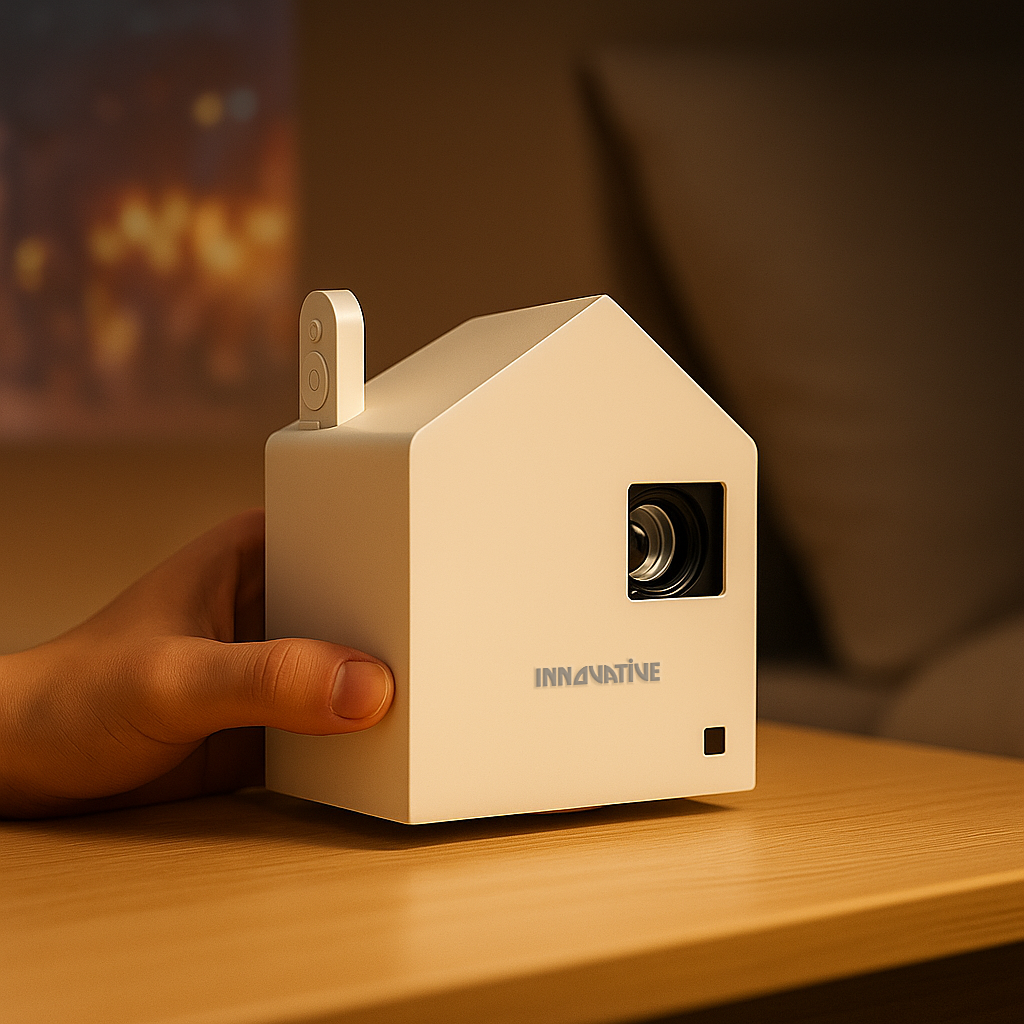

You do not buy a projector to admire a spec sheet. You buy one because you want a bigger, more comfortable screen for movie nights, sports, streaming, gaming, or family viewing without turning your room into a tech project. That is where this home theater projector guide starts - not with marketing claims, but with what actually works in real rooms.
The biggest mistake people make is shopping by one number. Usually it is lumens. Sometimes it is resolution. Sometimes it is a giant projected image claim that looks amazing in an ad and disappointing at home. A good projector system is never one spec. It is the match between your room, your light levels, your screen size, your content, and how simple you need the setup to be.
A home theater projector guide starts with the room
Before looking at projector models, look at the space. A bedroom setup has different needs than a dedicated media room. A living room with windows needs a different approach than a basement with full light control. A small apartment wall may favor a near-wall projector, while a flexible room-to-room setup may need portability and battery power more than ceiling mounting.
Ask yourself three practical questions. Will you mostly watch at night or during the day? How far can the projector sit from the screen or wall? Do you want this to stay installed, or move between rooms? Those answers narrow the field faster than any online filter.
If you watch mostly after dark, you can prioritize image quality, contrast, and quieter operation over brute-force brightness. If you need daytime viewing, brightness matters more, but not in the fake-marketing way many sellers imply. Real brightness must still be paired with good color and a screen that fits the room. Otherwise you just get a washed-out larger image.
Why brightness claims confuse buyers
This is where a lot of budget projector listings go off the rails. Inflated lumen numbers are everywhere, and many buyers assume higher advertised brightness automatically means a better picture. It does not. Some low-cost projectors use numbers that do not reflect real-world viewing at all, then compare themselves to better products in ways that fall apart the moment you turn on a lamp or try to read subtitles.
What matters is usable brightness in your room, at your intended screen size, with acceptable color and contrast. A projector that looks decent at 80 inches may look weak at 120. A projector that looks fine with cartoons may struggle with dark films. This is why real-world testing matters more than side-by-side marketing images.
Screen size is a decision, not a prize
Bigger is not always better. The right screen size is the one your projector can fill with enough brightness and clarity for the room. For many homes, 100 to 120 inches is the sweet spot. It feels cinematic without demanding a massive room or an ultra-high-output projector.
If your room has ambient light, sizing down a little often improves the experience more than buying a bigger image and fighting washout. The same logic applies to sharper-looking text and menus. A modestly smaller image with better brightness and focus usually feels more premium than stretching to the absolute maximum size the box claims.
Throw distance and placement matter more than most buyers expect
A projector is not like a TV you simply put on a stand. The distance from projector to screen determines image size, and every model has limits. Standard throw projectors need more room between the projector and screen. Short throw and ultra short throw models work closer to the wall and are often the better fit for apartments, small living rooms, and people who do not want cables running across the room.
If you have kids, pets, or a multipurpose room, near-wall placement can also reduce shadows, foot traffic issues, and accidental bumps. On the other hand, a traditional long-throw setup can be more cost-effective if you already have the depth and want a more discreet rear placement or ceiling install.
This is why measuring first saves money. Know your wall size, seating distance, and projector placement options before you shop.
Resolution is important, but it is not the whole picture
Resolution matters, especially on bigger screens, but buyers often overpay for the wrong kind of improvement. If your room conditions are poor or your projector is underpowered for the screen size, a higher-resolution image will not fix the fundamentals. You will still see a dull or flat picture.
For movies and premium streaming, Full HD can still look very good in the right setup. For larger screens, close seating, and buyers who want the cleanest detail from 4K content, stepping up makes sense. The key is to think of resolution as part of the package, not the headline.
The same goes for business and office crossover use. If you plan to show presentations, spreadsheets, or text-heavy content, text clarity should be treated as a separate priority. A projector that looks pleasant with video is not automatically strong with fine text.
Your screen choice can make or break the setup
A projector without the right screen is like good speakers placed in the wrong corner. You can get an image on a wall, but a proper screen improves consistency, perceived brightness, and overall polish.
In darker rooms, a standard screen may be all you need. In brighter spaces, ambient light rejecting screens can make a meaningful difference, especially for daytime sports or family viewing in living rooms where blackout conditions are unrealistic. Motorized screens work well for multipurpose spaces. Portable screens make sense if your projector moves with you. Fixed screens usually give the cleanest dedicated-cinema feel.
There is a trade-off here. Premium screen materials can improve performance, but only if they match the projector type and room light. Buying an expensive screen without thinking through placement and usage is just another version of buying by spec.
Sound, streaming, and convenience are part of the experience
Many first-time buyers focus so much on picture that they forget the rest of the system. If you want true living-room simplicity, think about audio, streaming access, and daily usability before checkout.
Built-in speakers can be fine for casual use, backyard nights, or portable viewing, but they rarely deliver the impact people expect from a home theater setup. If movies are the priority, plan for a soundbar or speaker system. If simplicity is the priority, look for wireless-friendly options that reduce cable clutter and setup friction.
The same goes for smart features. Built-in streaming can be convenient, but the real question is whether the projector makes your routine easier. Fast setup, stable connectivity, and intuitive controls often matter more than a long list of features you may never use.
Choosing by use case beats choosing by hype
The smartest way to buy is to match the projector to the life it will actually live.
For bedroom or common-room cinema, you want an easy, quiet setup with enough brightness for nighttime use and a size that feels immersive without dominating the room. For premium living-room home theater, the focus shifts toward stronger brightness, better contrast, and a screen that can hold up against some ambient light.
For small spaces, short throw or ultra short throw models often solve more problems than they create. For room-to-room flexibility, portability and battery capability can matter as much as image specs. For offices and classrooms, brightness alone is not enough - text clarity, reliability, and setup speed matter more.
That use-case-first approach is exactly why experienced retailers test products in realistic scenarios instead of repeating manufacturer claims. A projector should fit your room and your habits, not force you to redesign both.
What to avoid in any home theater projector guide
Avoid miracle pricing on projectors that promise everything at once - ultra bright, huge image, premium audio, true cinema quality, and tiny size for suspiciously low cost. Something is usually being exaggerated.
Avoid shopping based only on maximum image size. Avoid assuming every 4K label means the same thing. Avoid comparing photos from different sellers as if they were controlled tests. And avoid treating the projector as a standalone purchase if you know you also need a screen, mount, or better sound.
If you want the cleanest result, think in systems. Projector, screen, placement, and audio should work together.
A better way to make the final choice
Once you have narrowed the room type, screen size, and placement style, the final decision becomes much easier. You are no longer choosing between fifty confusing products. You are choosing between a few realistic fits.
This is where a specialist can actually help. Brands like INNOVATIVE Projectors have built their reputation on cutting through spec-sheet noise and recommending solutions by scenario, not hype. That matters when the difference between a good buy and a bad one is often not obvious from the product page alone.
A projector should make your evenings better, not give you another device to troubleshoot. If a model fits your room, handles your light conditions, works with the right screen, and keeps setup simple, that is the right projector - even if some louder ad says otherwise.
The best setup is the one you use often, enjoy immediately, and never have to apologize for after the box arrives.