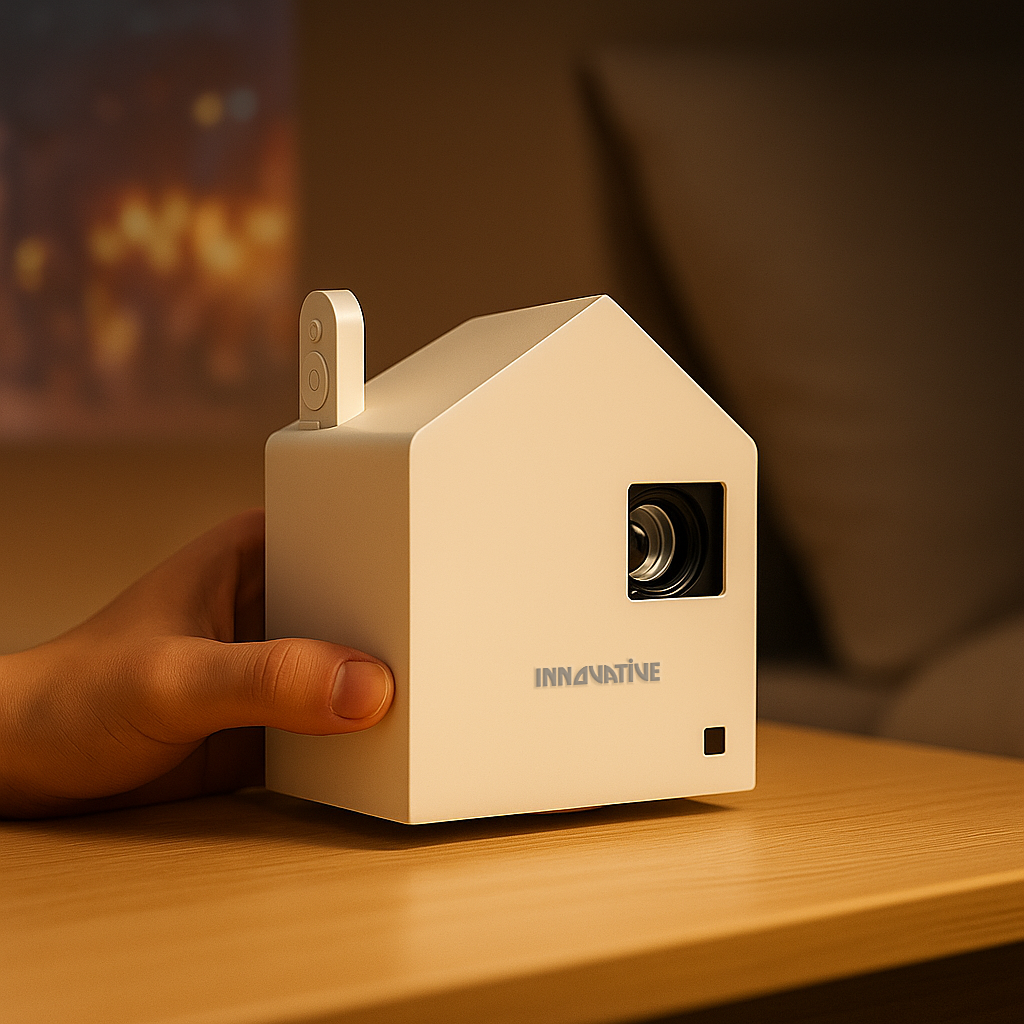

You notice projector noise more in a bedroom than almost anywhere else. In a living room, a louder fan can disappear into conversation, HVAC hum, or a soundbar turned up high. In a bedroom, where you are often watching at lower volume from just a few feet away, a quiet projector for bedroom movies is not a nice extra. It is the difference between a relaxing setup and a machine you stop using after the novelty wears off.
That is also why bedroom projector shopping goes wrong so often. Shoppers get pushed toward flashy budget models with inflated brightness claims, tiny speakers, and cooling systems that sound louder than the movie’s quiet scenes. On paper, they look impressive. In actual use, especially in a small room at night, they can be annoying fast.
What makes a projector feel quiet in a bedroom
Fan noise matters, but it is only part of the story. Bedroom viewing is a close-range experience. You are usually sitting or lying down near the projector, often in a room with soft surfaces and low ambient noise. That means you do not just hear how loud the projector is. You hear where the sound is coming from, whether it is a smooth low whoosh or a high-pitched whine, and whether the noise changes as the projector heats up.
A projector that seems acceptable in a showroom or open-plan room can feel much louder once it is a few feet from your pillow. This is why real-world testing matters more than spec-sheet promises. Many brands publish big numbers when it comes to brightness and stay vague about acoustics, because sound is harder to market than lumens.
There is also a trade-off most listings avoid. Higher brightness often means more heat, and more heat usually means more active cooling. If you are shopping for bedroom movie nights, max brightness is rarely the goal. A calmer, better-balanced projector in a light-controlled room often delivers a better experience than a so-called powerhouse that needs aggressive fans to keep itself cool.
The best quiet projector for bedroom movies is not always the brightest
This is where a lot of buyers get misled. They assume that brighter is automatically better, then end up with a projector designed for daytime punch rather than nighttime comfort. In a bedroom, especially for evening use, moderate real brightness paired with strong image quality is often the smarter choice.
A projector does not need to overpower sunshine if your use case is Netflix before bed, a weekend movie, or a kid-friendly big screen in a dim room. In fact, too much brightness in a dark bedroom can feel harsh. It can reduce the cozy factor people actually want from a bedroom cinema setup.
What you want instead is enough real brightness for your screen size, decent black levels for movie content, and a cooling system that does not call attention to itself. If the projector supports lower power modes without wrecking the image, that is often a plus for bedroom use. Lower fan speed in a dark room can be more valuable than chasing a headline lumen number that only exists in marketing copy.
Why cheap projectors often sound worse than expected
Low-end projectors cut corners in the parts you feel every night. Their optical engines run hot, their housings are less effective at managing airflow, and their speakers are usually thin and strained. Some even get louder after 20 or 30 minutes, exactly when you are trying to settle into a film.
This matters for families too. Parents often shop for projectors as a more comfortable alternative to smaller bright screens for kids. But a noisy, low-quality unit can create a different kind of fatigue. If the image is weak and the fan is distracting, you end up raising the volume or losing interest altogether.
Placement changes how quiet a projector feels
The same projector can feel whisper-quiet in one bedroom and distracting in another. Placement is a major reason.
If the projector sits right beside the bed on a nightstand, even moderate fan noise can feel intrusive because the sound is close to ear level. Move that same unit farther away, onto a rear shelf or ceiling mount, and the experience often improves immediately. Distance helps, but so does direction. A projector that vents hot air sideways toward the viewing position can seem louder than one that pushes airflow away from you.
Bedroom geometry matters too. Small rooms can bounce sound back at you, especially if the projector is tucked into a corner or near a hard wall. Soft furnishings help, but smart placement helps more. If you are serious about bedroom comfort, think of projector noise as part product choice and part room planning.
Short throw and ultra short throw have bedroom advantages
For many bedrooms, a short throw or ultra short throw setup makes life easier. These projectors can create a large image from closer to the wall, which means you may not need a unit humming near your head or across a walkway.
That does not mean every short throw model is quiet. Some run warm too. But in real use, putting the projector near the front of the room instead of near the bed can make movie nights feel cleaner, calmer, and less cluttered. It also reduces the chance of shadows, bumped tripods, and messy cable paths.
Sound quality matters almost as much as fan noise
A bedroom projector can be fairly quiet and still disappoint if the audio is weak. Thin built-in speakers force you to turn volume up higher, which makes every mechanical sound more noticeable. Better internal audio or an easy wireless connection to a speaker or headphones can make a huge difference.
For couples, roommates, or parents watching after kids are asleep, this is especially important. Good low-volume clarity is underrated. If dialogue is hard to hear, you will keep adjusting sound all night. A projector setup that sounds clear at modest volume feels more premium, even if it is not the most expensive model in the room.
Wireless convenience matters here too. Bedroom buyers usually want less friction, not a tangle of adapters and extra boxes. A projector that starts fast, connects easily, and works well with your streaming habits tends to get used more often. Convenience is not fluff. It is part of the product’s real value.
How to shop for a quiet projector for bedroom movies
Start with the room, not the listing. Ask how dark your bedroom gets, how far the projector can sit from the wall, and whether it will live on a shelf, tray, stand, or ceiling mount. Those answers narrow the field much faster than random spec comparisons.
Then judge the projector by scenario fit. For bedroom use, look for balanced real-world brightness, compact design, straightforward streaming options, and fan behavior that stays controlled over a full movie. If noise data is missing, be skeptical. Brands that care about real usage tend to talk about real usage, not just peak numbers.
Pay attention to image quality at the screen size you actually want. A projector that looks fine at 60 inches may fall apart at 100. Likewise, a projector that claims huge brightness but washes out dark scenes is not doing bedroom movies any favors. Movie watching is about comfort and immersion, not just raw output.
If you are building a full setup, screen choice helps too. A properly matched screen can let you use the projector more efficiently, instead of compensating with unnecessary brightness. That can support both image quality and quieter operation. This is one reason scenario-based retailers like INNOVATIVE Projectors focus on complete room solutions instead of treating the projector as a standalone gadget.
Myths that lead to bad bedroom projector purchases
The first myth is that any compact projector will be quiet. Small size does not guarantee low noise. In some cases, it means the opposite because there is less space for heat management.
The second is that advertised lumen numbers tell you whether a projector is right for a bedroom. They do not. Inflated claims are common, and even honest brightness figures say nothing about fan character, image balance, or nighttime comfort.
The third is that a bedroom projector can be judged like a conference room projector. It cannot. Bedroom viewing is more intimate, more sensitive to noise, and usually more dependent on low-light movie performance than on text-heavy brightness.
A better mindset is simple: buy for how you actually watch. If your goal is relaxed movies in a small room at night, the right projector should disappear into the experience. You should notice the film, not the cooling system.
That is the real benchmark. Not the loudest promise on the box, but whether the room still feels calm once the lights go down.