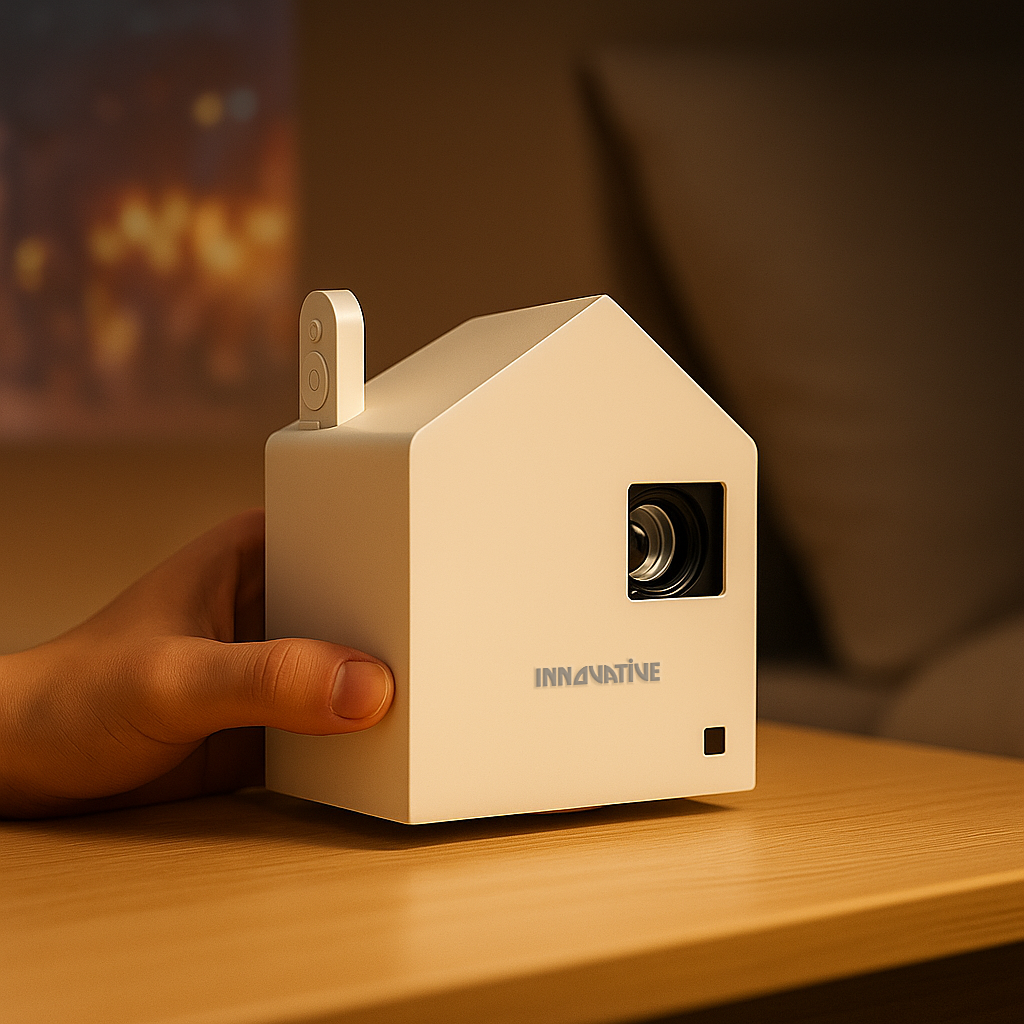

A projector that looks perfect on a product page can fall apart the second you try to use it in a hotel room, an Airbnb, or a client office with the lights half on. That is why choosing the best portable projector for travel is less about chasing flashy specs and more about knowing what actually holds up when you are away from home.
Travel changes the rules. You are not setting up in a dedicated theater with blackout curtains and permanent cables. You are dealing with small rooms, odd wall colors, limited outlets, carry-on weight limits, and the very real possibility that the Wi-Fi is terrible. A good travel projector needs to be compact, yes, but it also needs to be bright enough for imperfect spaces, simple enough to set up in minutes, and reliable enough that you are not troubleshooting instead of watching.
What the best portable projector for travel really needs
Most people start with size. That makes sense, but it is only one part of the picture. The smallest projector is not automatically the right one for travel if it is too dim to use or too compromised to handle streaming and presentations well.
Brightness matters more than many buyers expect. Travel environments are rarely ideal. Hotel curtains leak light. Vacation rentals use warm lamps and light-colored walls. Conference rooms are often brighter than they should be. If a projector only looks good in near-total darkness, it is not truly travel-friendly. This is also where buyers get misled, because many low-cost models advertise huge lumen numbers that do not reflect real-world viewing. Inflated brightness claims are one of the oldest tricks in this category.
Battery power is another major factor, but only if it is strong enough to be useful. Built-in battery sounds great until you realize some projectors only last long enough for a short episode, not a movie or a full presentation block. For travel, battery capability should mean genuine freedom from outlets when needed, not a marketing checkbox.
Then there is wireless convenience. If you travel often, fewer cables is better. But wireless should not mean fussy. A projector that takes ten minutes to connect or randomly drops screen mirroring is not helping. The best models balance wireless flexibility with dependable inputs, so you still have a backup if the wireless environment is crowded or restricted.
Small does not always mean better
There is a reason ultra-cheap pocket projectors get so many disappointed reviews. On paper, they look ideal for travel because they are tiny. In practice, many are underpowered, soft-looking, and frustrating with text. They can work for casual use in a fully dark room, but that is a narrow use case.
For family travel, that trade-off often shows up when kids are trying to watch a movie before bed and the image looks washed out unless every light is off. For work travel, it shows up when a spreadsheet or slide deck loses clarity and people at the back of the room cannot read small text. Portability should reduce friction, not create a new one.
That is why the better question is not, "What is the smallest projector I can pack?" It is, "What is the smallest projector that still performs like a serious display?" Those are very different products.
The travel use case changes which projector is best
The best portable projector for travel depends on how you travel and what you expect it to do once you arrive.
If your goal is entertainment in hotels and vacation rentals, prioritize battery support, onboard streaming convenience, easy autofocus or auto keystone, and enough brightness for nighttime viewing without making the room cave-dark. Good built-in speakers help too, because you may not want to pack external audio.
If you travel for work, text clarity moves much higher on the list. A projector can look fine with a movie trailer and still be weak with spreadsheets, presentations, or small fonts. That difference gets ignored in a lot of projector marketing. Real usability for business travel means readable text, stable image geometry, and enough brightness to avoid turning every meeting into a blackout exercise.
If you want one projector for both personal and professional travel, you are looking for balance. That usually means avoiding the very cheapest options and focusing on models with strong real-world brightness, dependable battery operation or USB-C power flexibility, and image processing that does not soften everything once scaling kicks in.
Brightness myths can ruin a travel purchase
This is where buyers get burned most often. A seller claims huge brightness numbers, the projector arrives, and suddenly even a modest screen size looks dull. Travel projectors are especially vulnerable to this problem because buyers assume portability justifies lower performance.
It does not. You should expect some trade-offs in a smaller body, but not to the point where the projector is barely usable outside perfect darkness. Real-world testing matters more than headline specs. How bright does the image actually look on a normal wall in a hotel room? How much detail survives with a lamp on? Does color hold up, or does everything turn gray and thin?
A projector that claims massive output but delivers a poor image is not a value. It is baggage.
Features that matter on the road
Some features sound minor until you are traveling with them. Auto setup tools, for example, are not just nice extras. In a temporary space, you may be placing the projector on a nightstand, a dresser, or a desk that is slightly off-center. Fast focus and image correction can turn an annoying setup into a two-minute job.
Battery life should match actual use. If you want movie night, you need enough runtime to finish a film without rationing brightness. If you need it for presentations, you want confidence that you can get through a session even if the room layout leaves you far from an outlet.
Noise matters too. A projector used in a quiet hotel room feels much louder than one used in a busy living room. Fan noise can make a compact projector feel cheap fast.
And do not ignore the power adapter. Some portable projectors are technically small but come with a bulky brick that defeats half the portability benefit. Travel-friendly design includes the full kit, not just the projector body.
What to avoid when shopping
The first red flag is a projector sold almost entirely on exaggerated specs. If the listing shouts impossible brightness, "4K support" without meaningful context, and oversized image claims but says little about real viewing conditions, be careful.
The second red flag is poor clarity with mixed use. Many travel buyers want one device for streaming, casual gaming, and occasional work. A projector that only looks acceptable with cartoons in a dark room is not versatile enough.
The third is overdependence on one connection method. Travel is unpredictable. Sometimes wireless casting works perfectly. Sometimes hotel networks block it, or your device pairing becomes a mess. A projector with flexible input options gives you a safety net.
How to choose without overbuying
Not everyone needs the same level of travel projector. If you only want occasional vacation movie nights, you can prioritize convenience and compactness over maximum output. If you travel weekly for work, reliability and text readability should come before novelty features.
This is where scenario-based buying beats spec-sheet buying. Think about your actual travel routine. Are you usually in dark rooms or mixed lighting? Do you need battery first, or are outlets usually available? Are you projecting movies, slides, or both? The right answer comes from the use case, not from whichever product page uses the biggest numbers.
That is also why curated selection matters. At INNOVATIVE Projectors, we have long pushed buyers to shop by real-life scenario rather than raw claims, because a projector that is great for a bedroom binge-watch is not automatically great for a bright meeting room or frequent travel.
The best portable projector for travel is the one you will actually use
A travel projector should make big-screen viewing easier, not more complicated. It should fit your bag without forcing you to accept a dim, soft, unreliable image. It should work when the room is not perfect. And it should earn its place in your luggage by doing more than one thing well.
If you keep that standard in mind, you will avoid most of the category's noise. Look for honest brightness, practical battery performance, strong clarity, and setup that respects the fact that travel is already enough work. The right projector feels like freedom. The wrong one feels like a gadget you stop packing after the second trip.
When you shop with real conditions in mind, the decision gets much simpler - and the projector is far more likely to come with you every time.