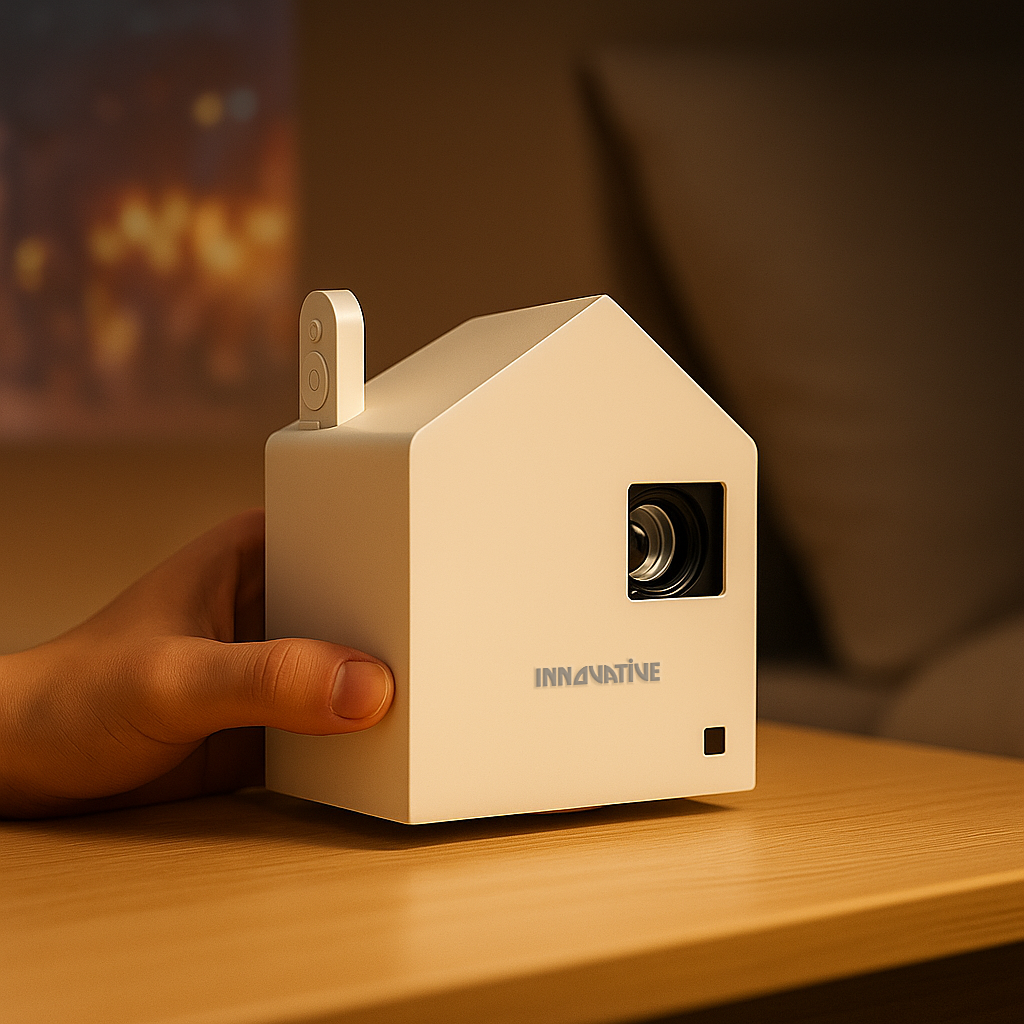

If your TV feels too small, too heavy, or too fixed in one spot, the real question is not whether projection looks cool. It is whether can a projector replace tv is actually a practical yes for your room, your habits, and your expectations. In many cases, it is. But only when you stop shopping by inflated spec sheets and start thinking about how you actually watch.
Can a projector replace TV in real life?
Yes, a projector can replace a TV for a lot of people. It can be the better choice in bedrooms, apartments, shared living spaces, movie-first setups, flexible rooms, and even some offices. A good projector gives you the one thing TVs still make expensive and awkward: a truly large image without dominating the room when it is off.
That said, a projector is not automatically a TV killer. If you watch all day with sunlight pouring in, want the absolute simplest one-button setup, or need background news on for hours in a bright kitchen, a TV may still fit better. The right answer depends less on hype and more on three things: room light, screen size expectations, and what you watch most.
This is where buyers get misled. Cheap projector ads promise giant images, huge brightness numbers, and "TV replacement" claims that fall apart the moment you try daytime sports on a white wall. Real-world testing matters more than marketplace marketing.
Where a projector beats a TV
A projector wins when screen size is the priority. Once you want 100 inches or more, TVs become expensive, bulky, and hard to move. A projector can give you a cinematic image in a bedroom, living room, or media space without turning the room into a shrine to a black rectangle.
It also wins on flexibility. You can move many models from room to room, set them on a shelf, mount them to the ceiling, or use a near-wall setup with an ultra short throw model. For renters and apartment dwellers, that matters. You are not always designing around one giant fixed display.
Comfort is another overlooked advantage. A projected image is reflected light, not direct light blasting from a panel. For long evening viewing, many people find that easier on the eyes, especially in family spaces where kids are watching from closer distances. That does not mean every projector is automatically better, especially the low-quality bargain models that overpromise and underdeliver. It means a well-chosen projector can create a more relaxed viewing experience than many people expect.
For offices and presentations, projectors can also replace TVs when size and portability matter more than permanent installation. A good business-ready projector with strong text clarity can handle decks, spreadsheets, and hybrid meetings far better than the fuzzy budget models that look fine only with cartoons and YouTube thumbnails.
Where a TV still has the edge
TVs are still easier in bright rooms with zero setup tolerance. If you want to turn something on at noon with sunlight everywhere and get a punchy image on a blank wall, a TV is hard to beat.
They also make sense for people who mostly consume casual content rather than intentional viewing. If the display is on all day for background noise, weather, cable news, or quick drop-in viewing, a TV often fits that pattern better.
Gaming can go either way. A quality projector can be excellent for console play, especially if you want immersion. But if you are highly competitive, sit close, and care about the fastest response and brightest daytime image, many TVs still hold the advantage.
So the honest answer is not projector good, TV bad. It is this: a projector replaces a TV best when you want a bigger, more flexible, more lifestyle-friendly screen and are willing to match the setup to the space.
What decides whether a projector can replace a TV
Brightness is not just a spec
This is the biggest trap. Many shoppers compare advertised lumen numbers and assume that the highest number wins. That is exactly how people end up disappointed.
Brightness only matters in context. A projector for a dark bedroom movie setup does not need the same output as one meant for daytime living room viewing. And brightness alone does not guarantee a better picture. Push brightness too far on the wrong platform and you can sacrifice black levels, contrast, color accuracy, and overall image quality.
If you want a projector to replace a TV, think in use cases: nighttime streaming, mixed day-and-night family viewing, bright-room sports, or office presentations with readable text. Those are real buying categories. Raw numbers are not.
The screen matters more than most buyers think
A projector on a plain wall can work, but it is rarely the best version of what you paid for. If you are serious about TV replacement, the screen is part of the system, not an accessory afterthought.
In darker rooms, a standard screen can look excellent. In brighter spaces, an ALR screen can make the difference between washed out and watchable. In small rooms, a motorized or near-wall setup can keep things clean and practical. The mistake is judging projection based on a bad wall, bad placement, and bad ambient light control.
Placement changes everything
Projectors are not one-size-fits-all. Some work best from across the room. Others are built specifically for short-distance placement near the wall. That matters if you live in an apartment, have kids running around, or simply do not want cables stretched through the room.
A modern setup can be far cleaner than people assume. Wireless streaming, battery-capable portable models, and properly matched mounts or trays can make projection feel simple instead of fussy. But that only happens when the projector matches the room.
Can a projector replace TV for different types of buyers?
For bedroom streamers, the answer is often yes. This may be the strongest use case of all. You get a large image, a less intrusive room aesthetic, and a comfortable evening viewing experience without needing a massive TV mounted opposite the bed.
For living rooms, yes - with conditions. If you watch mostly at night or can control some light, a quality projector and the right screen can absolutely replace a TV. If your living room is flooded with daylight all day and you refuse any light management, you need a projector built for that environment, not a bargain unit pretending to be one.
For small spaces and apartments, yes again. In fact, this is where projectors often make more sense than buyers realize. Near-wall and ultra short throw options open up big-screen viewing without requiring deep rooms. Portable models also let one device serve multiple spaces.
For families, a projector can be a smart replacement if image comfort and screen size matter. Movie nights, educational content, sports, and casual streaming all benefit from scale. The key is avoiding the low-end products that advertise impossible performance and deliver poor focus, weak brightness, and noisy operation.
For offices, classrooms, and meeting spaces, it depends on text clarity and room brightness. A projector can absolutely replace a TV in presentation environments, but only if it has been chosen for sharp text and repeatable visibility. This is not the place to gamble on flashy consumer specs.
The biggest myths behind projector vs TV
One myth is that projectors are always complicated. That used to be more true than it is now. Modern models can be remarkably plug-and-play, especially when paired with the right screen and placement plan from the start.
Another myth is that all projectors are only for dark home theaters. Also false. Some are built specifically for bright rooms, daytime viewing, or office use. The problem is not the category. The problem is assuming every projector can do every job.
The most expensive myth is that a cheap projector with giant marketing claims can replace a TV just because the product page says so. It usually cannot. Real performance is about image quality, usable brightness, focus consistency, color, motion, and the environment it is used in.
If you want help matching a projector to a real room instead of a fantasy spec sheet, that is exactly the kind of buying framework we focus on at Innovative Projectors.
So, can a projector replace TV?
Yes - if you want a bigger image, a cleaner-looking room, and more flexibility than a giant panel can offer. No - if you expect every projector to overpower bright daylight on a bare wall with zero planning.
The better question is this: what do you want your screen to do? If the answer is movie nights, bedroom streaming, apartment-friendly big-screen viewing, portable use, near-wall simplicity, or presentation-ready scale, a projector can be more than a replacement. It can be the smarter fit.
Buy for the room, not the ad. That is how projection goes from compromise to upgrade.