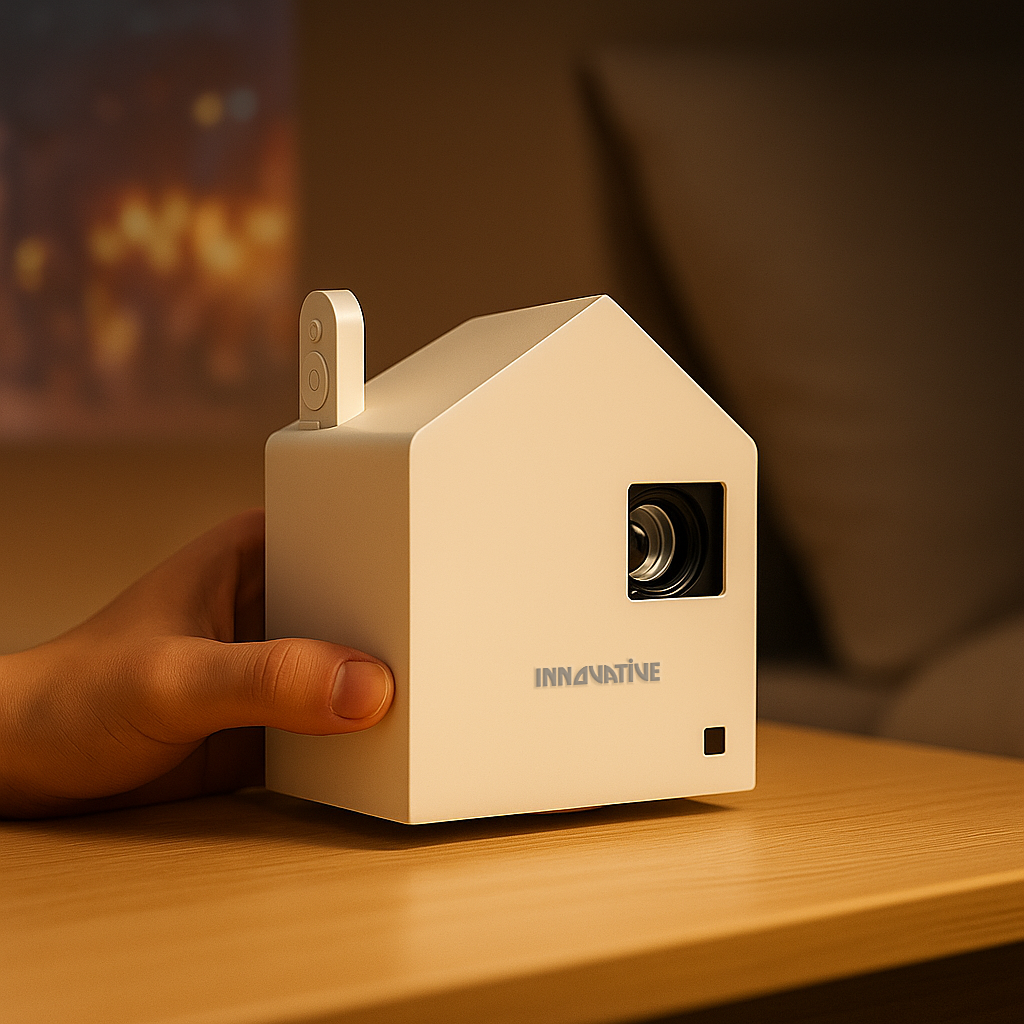

Put a projector one foot from the wall and get a 100-inch image, or place it across the room and aim carefully from a shelf or ceiling mount. That is the real-world difference in ultra short throw vs long throw - and it changes far more than placement. It affects picture quality, room layout, daytime performance, installation cost, and whether your setup feels easy or annoying six months later.
If you are shopping by use case rather than marketing hype, this is the comparison that matters. Throw type is not a minor spec. It shapes the entire experience.
Ultra short throw vs long throw: what changes in real life?
An ultra short throw projector sits very close to the wall or screen, usually on a media console or a dedicated wall tray. A long throw projector sits much farther back, often across the room, on a rear shelf, table, or ceiling mount.
That sounds simple, but the trade-offs are sharp. Ultra short throw is built for people who want a big image without running cables across the ceiling or hanging hardware overhead. Long throw is often better when you have room depth, controlled lighting, and a cleaner path to a traditional home theater layout.
The mistake many buyers make is assuming one is simply more advanced than the other. It is not that simple. Ultra short throw is not automatically better because it looks modern, and long throw is not automatically outdated because it needs distance. The better choice depends on your room, your screen, and how you actually watch.
When ultra short throw makes more sense
Ultra short throw is strongest in apartments, family rooms, offices, classrooms, and any space where you cannot or do not want to mount a projector across the room. If your couch is against the back wall, if your ceiling is not ideal for mounting, or if you want a setup that feels closer to a TV replacement, UST has a clear advantage.
It also solves a problem people notice immediately with standard projectors: shadows and walk-through interference. Because the projector sits near the wall, no one crosses the beam on the way to the kitchen. In homes with kids or busy shared spaces, that matters.
For daytime viewing, ultra short throw can also pair very well with the right ambient light rejecting screen. That part is important. Many UST buyers are told the projector alone beats sunlight. It does not. The screen does a huge amount of the work. A proper UST ALR screen is often what turns a washed-out daytime picture into something watchable and high-contrast.
There is another lifestyle advantage. UST setups tend to feel less invasive. You are not planning your room around a projector hanging from the ceiling. You are placing a unit near the wall, connecting your source, and keeping the space more flexible.
When long throw is still the smarter choice
Long throw projectors are still the better fit in plenty of rooms, especially dedicated theater spaces, larger living rooms with mounting flexibility, and business setups where you need specific image sizes from farther back.
A well-placed long throw projector can deliver excellent image uniformity and often gives you more flexibility in pricing, image size range, and installation height. If you have a dark room and can mount properly, long throw often offers strong value.
It is also the more forgiving category when you want to experiment with screen sizes or projector placement within a wider range. Ultra short throw placement is precise. A small shift can affect geometry quickly. Long throw systems usually give you more breathing room.
For office and presentation use, long throw can be a very practical choice if the room depth supports it. Mounted correctly, it stays out of the way and can project a large image for slides, spreadsheets, and video calls. But text clarity matters more than throw type alone, which is why real-world testing beats spec-sheet promises every time.
Picture quality is not just about throw distance
A lot of shoppers assume UST means sharper or more premium because it costs more. That is not always true. Throw distance does not guarantee image quality.
What matters is the total system: the projector's real brightness, the lens design, image processing, color performance, and the screen it is paired with. A poor ultra short throw projector can still look bad. A well-chosen long throw projector can still look excellent.
This is where the market gets messy. Brands often push inflated lumen claims or compare projectors in unfair conditions. That creates the false idea that one category dominates across the board. In reality, brightness claims without controlled testing do not tell you much, especially if one projector is shown on a wall and another on a proper screen.
If you care about movie nights, sports, or presentations with detailed text, ask better questions. How does it perform in your lighting? Does the image stay consistent edge to edge? Is the text actually readable from normal seating distance? Does it require a specialized screen to look its best? Those answers matter more than hype.
The screen question most buyers underestimate
With long throw, you usually have more freedom in screen choice. You can use a standard matte white screen in a controlled room and get great results. In brighter spaces, you may step up to an ALR screen depending on the projector and room conditions.
With ultra short throw, screen choice is much less optional if you want premium results. UST projectors have a steep projection angle, so they work best with screens designed specifically for that angle. Put a UST projector on the wrong screen, or directly on a textured wall, and you may see hotspotting, uneven brightness, or reduced contrast.
This is one reason a UST setup can cost more than buyers expect. The projector may be only part of the budget. The right screen and sometimes a precise mounting solution are part of the real purchase.
That does not mean UST is overpriced. It means the category is often misunderstood. If your goal is a clean near-wall setup in a bright shared room, the full system may absolutely be worth it. But if you are trying to stretch every dollar in a dark room, long throw often gives you more flexibility.
Installation: easy in one way, demanding in another
Ultra short throw is often described as easier to install, and that is true in one sense. You usually avoid ceiling mounting, long cable runs, and projector placement at the far end of the room. For many people, that is a major win.
But UST also demands precision. The cabinet height, the distance from wall to projector, and the flatness of the screen all matter. Tiny alignment changes can affect the shape of the image. Digital keystone can help, but relying on correction too heavily is not ideal if you care about image integrity.
Long throw installation may be more labor-intensive up front, especially with a ceiling mount, but once it is dialed in, it can be very stable and low-maintenance. In dedicated spaces, that is often the cleaner long-term solution.
So which one is easier? It depends on what kind of difficulty you are trying to avoid. If you hate construction and cable routing, UST feels simpler. If you want the broadest placement flexibility after installation, long throw may feel less finicky.
Which is better for small spaces?
For small rooms, ultra short throw usually wins. It gives you a large image without needing ten feet or more of throw distance, and it keeps the projector out of the middle of the room. That is ideal for bedrooms, apartments, and compact living spaces.
Still, not every small room needs UST. Some portable or short-to-long throw models can work beautifully in a bedroom if you are okay with a shelf mount or table setup. This is where use case matters more than trend. At INNOVATIVE Projectors, that is the entire point of the buying process: match the projector to the room and routine, not just the category label.
So which one should you buy?
Choose ultra short throw if you want a TV-style layout, have limited room depth, care about avoiding beam interruptions, and are willing to pair it with the right screen for best results. It is especially strong for bright shared rooms, modern living spaces, and near-wall installations where convenience matters every day.
Choose long throw if you have enough distance, want strong value, prefer more screen flexibility, or are building a traditional theater or presentation setup. It remains an excellent option when the room supports it.
The smartest buyers do not ask which throw type is best in general. They ask which one fits the room, the lighting, and the way they actually watch. That question usually leads to a much better projector - and far fewer regrets after the box is opened.